

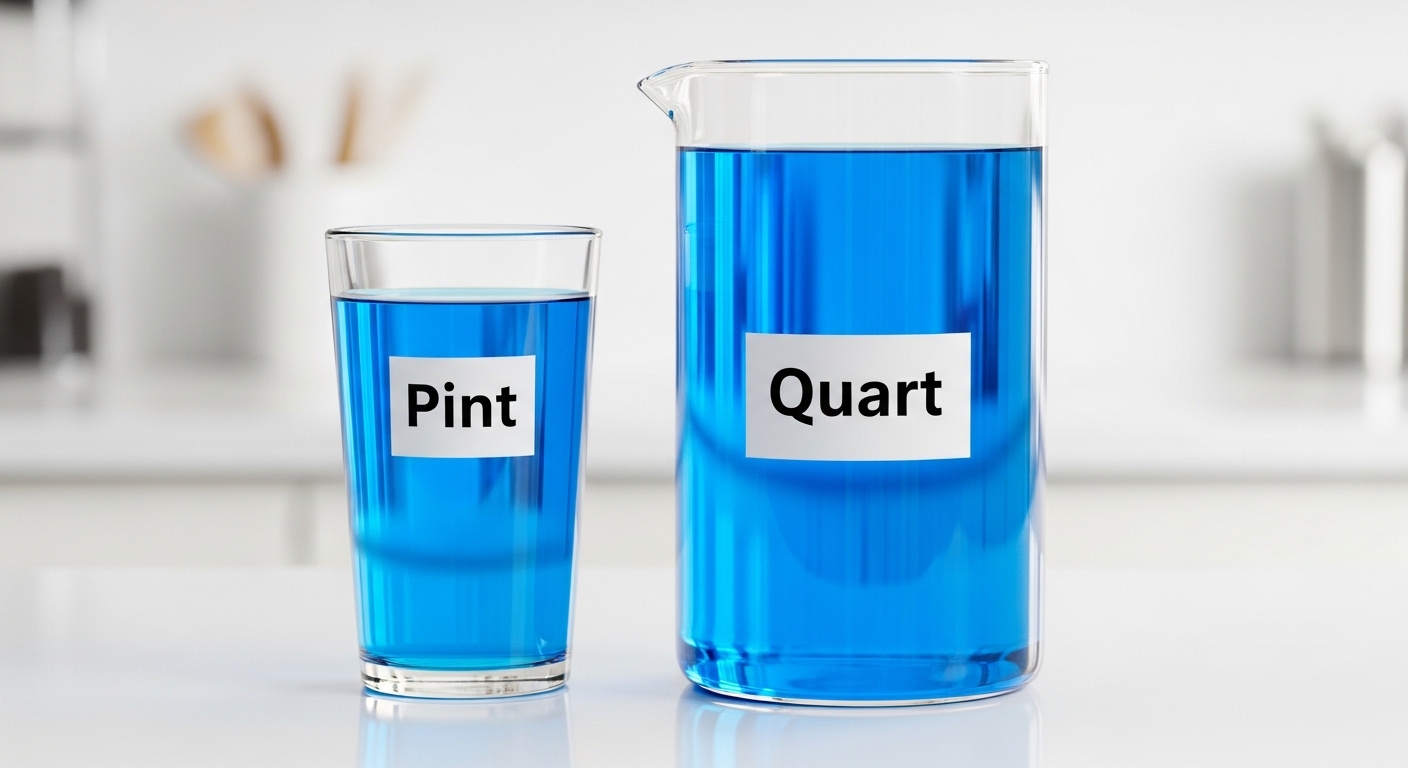
When it comes to measuring liquids in cooking, baking, or everyday use, understanding the difference between a pint and a quart is essential. While both units are common in the United States, they represent different volumes and are often confused by many. Knowing how a pint compares to a quart can help prevent measurement errors and improve accuracy in recipes and other applications. The distinctions between pints and quarts, their conversions, practical uses, and tips for measurement, offering a clear guide for anyone looking to master volume measurements.
Definition of a Pint
A pint is a unit of volume commonly used in the United States and the United Kingdom, though the sizes differ slightly. In the U.S., a pint equals 16 fluid ounces or approximately 473 milliliters. Pints are often used for measuring smaller liquid quantities such as milk, juice, or beer. Understanding what constitutes a pint is important for accurate measurement in recipes and beverage servings. In addition to liquids, pints can also be used to measure certain dry ingredients, though conversion rules may vary. Recognizing the standard size of a pint helps ensure consistency in cooking and other everyday measurements.
Definition of a Quart
A quart is another unit of liquid measurement that is larger than a pint. In the U.S., a quart equals 32 fluid ounces or roughly 946 milliliters, which is exactly twice the size of a pint. Quarts are typically used when larger quantities of liquids are required, such as in soups, sauces, or bulk beverages. Like pints, quarts can be applied to both liquid and dry measurements with appropriate conversion adjustments. Understanding what a quart represents allows individuals to scale recipes, measure ingredients accurately, and avoid under- or over-pouring in both culinary and household applications.
Pint vs Quart: The Main Difference
The primary difference between a pint and a quart is their volume, with one pint vs quart equal to two pints. This simple ratio is key to understanding conversions between the two units. While a pint is suitable for smaller quantities, a quart is designed for larger amounts. Confusing the two can lead to errors in recipes, beverage servings, or storage capacities. Additionally, the visual size of containers labeled as pints or quarts can help in identifying the unit without precise measurement tools. Understanding this fundamental difference ensures accurate and efficient use in practical situations.
Converting Pints to Quarts
Converting between pints and quarts is straightforward once you understand the ratio. Since one quart equals two pints, you can convert pints to quarts by dividing the number of pints by two. For example, four pints equal two quarts. Conversely, to convert quarts to pints, multiply the number of quarts by two. This simple calculation allows for quick adjustments in recipes, cooking, or liquid measurements. Familiarity with this conversion is particularly useful when scaling ingredients or adjusting servings, making the distinction between pints and quarts practical and easy to apply in everyday tasks.
Converting Quarts to Pints
To convert quarts to pints, it is important to remember that each quart contains two pints. Multiplying the number of quarts by two provides the equivalent number of pints. For instance, three quarts would equal six pints. This conversion is especially helpful in cooking, beverage service, and storage planning. Knowing how to convert quarts to pints ensures precision when following recipes or measuring liquids in containers that may be labeled differently. Practicing this conversion makes it easier to work with mixed measurement systems and prevents errors when scaling or transferring ingredients.
Practical Uses of Pints
Pints are widely used in various practical situations due to their manageable size. In the culinary world, they are commonly employed for milk, cream, or small quantities of soup and sauces. Pints are also standard in the beverage industry, particularly for beer and soft drinks. In addition, pint-sized containers are popular for household storage of liquids like juice or condensed products. The versatility of pints allows for precise portion control and smaller-scale measurements, making them ideal for individual servings, recipe adjustments, and everyday use in both kitchens and retail environments.
Practical Uses of Quarts
Quarts are commonly used when larger volumes of liquid are required. They are ideal for cooking large batches of soups, sauces, or beverages. Quarts are also popular for packaging milk, juice, and other household liquids, providing a convenient and standardized container size. In addition, quarts are often used for measuring chemicals or cleaning solutions where accuracy is important. The larger volume of a quart makes it suitable for both personal and commercial applications, allowing users to measure efficiently while reducing the need for repeated smaller measurements.
Tips for Measuring Accurately
Accurate measurement is crucial when working with pints and quarts. Using marked measuring cups or containers helps ensure precision. Always check whether a recipe calls for U.S. or imperial measurements, as sizes can differ internationally. Pour liquids on a flat surface and read the measurement at eye level to prevent errors. Being aware of the pint-to-quart conversion also helps maintain consistency. Accurate measurement not only improves cooking and baking outcomes but also prevents waste and ensures proper portion control, whether in the kitchen, laboratory, or beverage service.
Common Mistakes to Avoid
One common mistake is confusing pints and quarts, which can result in doubling or halving liquid quantities unintentionally. Using incorrect conversion formulas or overlooking unit differences between countries can also lead to errors. Another issue is assuming that all measuring containers are standardized, which is not always the case. Taking time to check container markings, understanding the specific measurement system, and practicing conversions reduces mistakes. Awareness of these common pitfalls ensures that measurements are accurate, whether for cooking, beverage service, or household tasks, leading to more reliable results.
Conclusion
Understanding the difference between a pint and a quart is essential for accurate measurement in everyday life. Pints are smaller and ideal for individual servings or smaller quantities, while quarts are larger and suitable for bulk liquids or larger recipes. Knowing the conversions between these units, practical uses, and tips for accuracy helps prevent errors and ensures efficiency in cooking, storage, and beverage preparation. By mastering the distinctions between pints and quarts, individuals can measure with confidence, improving outcomes in both culinary and household applications.